


When the fire alarm sounded at Northwood School during a recent accreditation visit, the students did not know it was a drill. Faculty had been warned it would happen at some point over a three‑day window, but not when. The visiting evaluators from the New York State Association of Independent Schools (NYSAIS) were asked to quietly pull several students out of the drill, without telling school leadership whom they had taken aside.
Ninety seconds after the alarm, Northwood’s leadership team had a complete roll: every student either marked safe or flagged as missing.
"Within 90 seconds, everybody was accounted for and we identified the kids that were missing,” recalls John Spear, Assistant Head for School Life at Northwood School. “We didn’t know which students were being pulled. I went back to the committee and I said, we’re missing these four kids. And he’s like, 'And that’s who we have, good job. That’s impressive.'”
For Northwood School, a small boarding school in Lake Placid, New York, this was more than a successful drill. It was a concrete demonstration that its emergency response systems, now centered on Orah, can account for highly mobile students with speed and precision.
A Boarding School Where Students Are Rarely Still
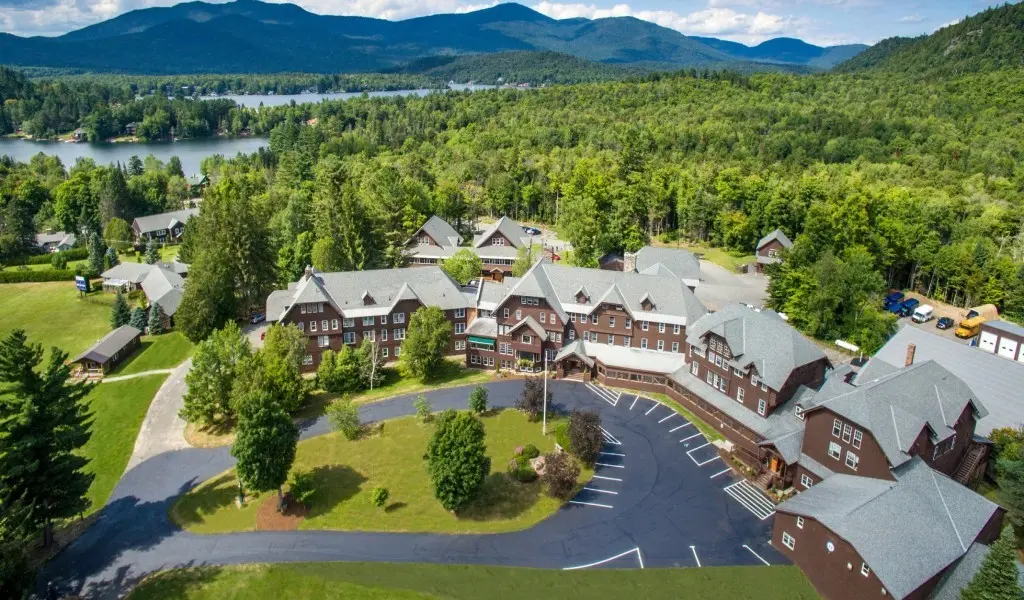
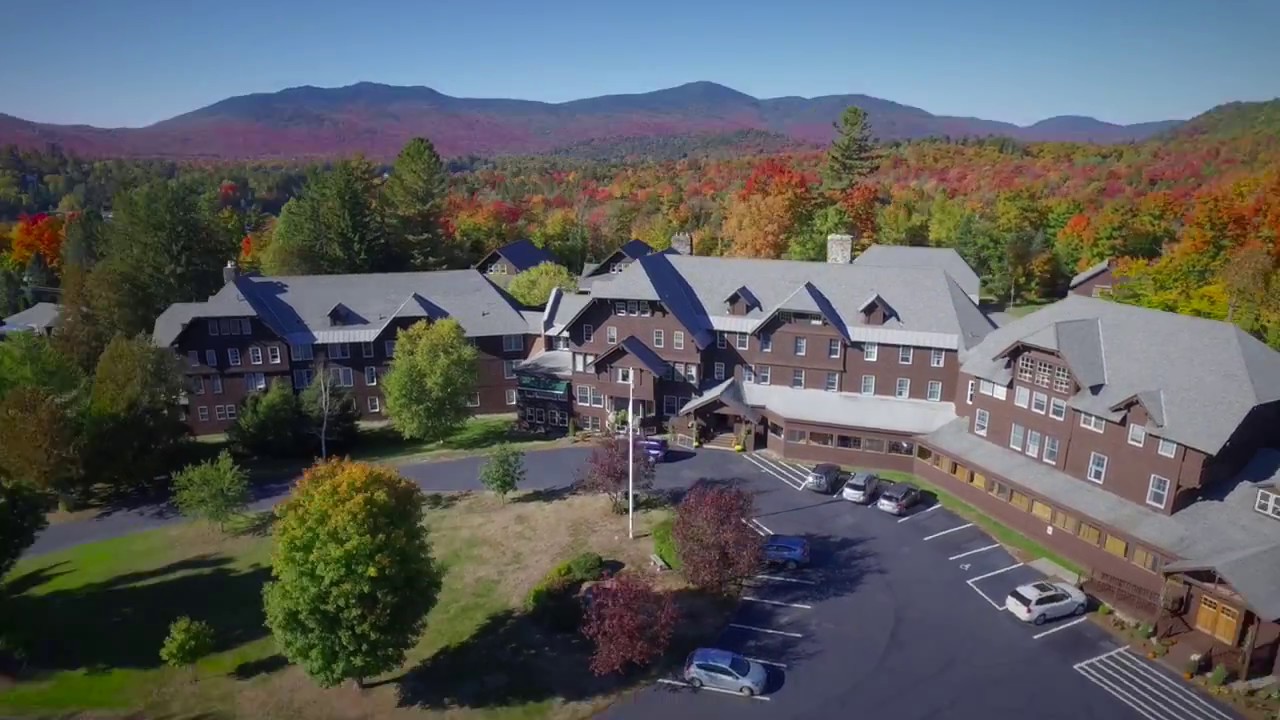
Northwood enrolls roughly 200 students, about 150 of whom board on campus. Many are deeply involved in elite athletics and travel frequently for games, competitions, and training.
“We’re a small boarding school… 200 students, about 150 of them are boarding students,” Spear explains. “We have a team that left today on Wednesday, and they’re not coming back until Sunday. We have a group of kids right now in Colorado and Norway… So they are deeply involved in their athletics.”
That movement complicates what might otherwise be a straightforward task: accounting for every student in an emergency. On any given day, a subset of students may be home sick, on a college visit, away with a team, or traveling internationally. Traditional tools—clipboards and static spreadsheets—struggled to keep up.
“In the old days, we literally had nine or 10 clipboards with everybody’s name on it,” Spear says. “The person that was in my job would have to go around and manually update every one of those clipboards, which was just crazy.”
The result was not only time‑consuming but risky. A paper list could easily be out of date by the time a drill began, leaving gaps between where the school thought students were and where they actually were.
“Sometimes the clipboard was like way out of date and so the folks didn’t know it,” Spear notes. “So there’s a kid not there, but he is supposed to be there, or at least we thought he was supposed to be there… and the sheet was wrong. So the kid just sort of goes unaccounted for.”
Moving From Clipboards To Live Check-Ins & Collaborative Emergency Rolls
Northwood adopted Orah (then Boardingware) initially to address day‑to‑day oversight and health and safety requirements during the pandemic. Over time, emergency roles became a central use case.
“Our emergency rolls, for example, wasn’t something that was on our punch list when we came on with Orah,” Spear says. “But we found them incredibly important and useful.”
During a fire alarm or other emergency, any faculty member at Northwood can activate an emergency roll in Orah. That choice is deliberate: the school wants whoever is on the scene, whether they're a senior leader or a new staff member, to have the authority to start the process.
Once the roll is live, staff on site and off can help account for students. At Northwood, students evacuate to a common field, organized loosely by dorm groups. Faculty in the field and colleagues elsewhere open the same roll on their phones, mark students present, and help resolve any unknowns.
“It’s a quick and easy way for a group of people to collaborate to account for everybody quickly,” Spear says.
This collaborative model underpins the 90‑second outcome. Rather than a single administrator cycling through outdated lists, multiple adults share a real‑time view of who should be present, who is known to be away, and who has not yet been seen.
Testing The System Under Scrutiny, All Students Accounted For In 90 Seconds
The NYSAIS reaccreditation drill became a de facto stress test for this approach. The conditions were intentionally realistic: no warning for students, limited notice for faculty, and external evaluators observing the response.
To add an additional (realistic) layer of complexity, the visiting committee removed students at random to disrupt the roll.
“I asked the committee to just pull as many kids as you want from the drill,” he says. “Like, don’t tell us who it is, just pull whoever you want.”
When the alarm sounded, students evacuated as planned. Faculty activated an Orah emergency roll. Over the next minute and a half, staff marked students as accounted for and flagged those who were not physically present.
The key test was whether the system’s “missing” list would match the committee’s list of pulled students. It did. They named the 4 students NYSAIS has removed.
“Within 90 seconds, everybody was accounted for,” Spear says. “We identified the kids that were missing… and that’s who we have. Good job. That’s impressive.”
For the accrediting team, this was evidence that Northwood could not only move students out of buildings quickly but also verify, with data, who was safe and who still needed to be found.
Extending Safety Beyond Students
Northwood’s use of Orah in emergencies extends beyond students to include faculty households. Many staff members live on campus with partners and children. During an alarm or drill, they want clarity not only about students but also about their own families.
“Everyone in the community, including students, faculty, and this is an important thing, we figured out a way to get… our faculty members [who] live on campus and they have family members, adults, family members, and teenage family members that have phones,” Spear explains. “So they all now get alerts.”
Those alerts help reduce confusion and anxiety when sirens sound.
“When an alarm is going off, they know what’s going on,” he says. “They know if it’s a drill or if it’s a, you know, or what. So that’s been helpful and it’s been good for peace of mind for especially like families with young children.”
Real Incidents, Not Just Drills
The 90‑second drill took place in a controlled setting, but Northwood uses the same tools when alarms are not planned. Spear cites real fire responses in which the local fire department arrived on campus.
“We’ve had actual fire emergencies,” he says. “Nothing serious, but the fire department came and, you know, extinguished something… and we used Orah in the same way where everybody was accounted for quickly and all of that.”
The school has also configured text alerts so that, once an emergency is truly over, an “all clear” message goes out to the community. That automation comes with its own risks; Northwood learned early on that closing a roll too soon can send a premature signal.
“Once everybody’s accounted for… if you close the roll, it automatically sends a text message to everybody that it’s all clear,” Spear notes. “We made that mistake once… but most people are just like, if I’m around, they’re not gonna close the roll. They’re gonna wait for me to do it.”
These experiences have led the school to consider more granular controls—such as limiting who can end a roll—while keeping activation widely accessible.
Quantifying The Operational Shift: "Easily six hours of savings a week for a senior administrator"
Beyond emergencies, the transition to Orah has reduced the routine administrative load associated with tracking student whereabouts.
“Probably six hours a week were spent dealing with those logistics,” Spear estimates, referring to the pre‑Orah process of updating clipboards and chasing down information. “And that’s minimal now… it’s probably easily six hours of savings a week for a senior administrator at the school. So it’s freed up that time.”
For families, the changes are less visible but significant. Their children are more consistently accounted for, and discrepancies that once passed unnoticed, such as a student assumed to be present when they were not, are now flagged in real time.
“The families don’t realize it, but their kids are a lot safer because of that,” Spear says.
Safety As A System, Not A Slogan
Northwood’s leadership is candid that no system is perfect. They continue to refine roles and permissions, and they are cautious about allowing students to mark themselves safe.
“There’s a feature in Orah where a student can say, I’m safe,” Spear says. “They can actually say they’re safe, but it doesn’t look any different than if a faculty member marked them safe. So I’m concerned that… we could instill the habits where the kid will stay in bed and check that they’re safe.”
In lockdown or active‑shooter scenarios, however, the ability for students to mark and update their own status may become a critical tool.
“In our lockdown and, like, active shooter, they do have the option to mark themselves safe,” he notes. “I hope we never use that… but the fact that they can mark themselves safe and I’m pretty sure that they can then change to mark themselves unsafe… I think that could be really valuable.”
Spear’s perspective is pragmatic. Orah is not a silver bullet, but a platform that, when paired with training, discipline, and clear protocols, makes it possible for Northwood to know where its students are—and who still needs help—faster than ever before.
The 90‑second drill during reaccreditation stands as a concise measure of that progress: in a community where students are constantly on the move, the school can still account for every one of them in under a minute and a half.
“It’s incredibly effective at making sure your students are safe and accounted for,” Spear says. “That’s the most important thing we do. We may take that for granted sometimes. But Orah ensures that you are on the top of your game when it comes to making sure that students are safe and accounted for. After using Orah, I can’t imagine operating without it now.”


