Attendance feels like busywork to teachers. It doesn't have to.
Matt Varley
•
October 23, 2026
Most periods, the roll gets taken without a second thought. Then a substitute covers a class, a teacher gets pulled into a conversation at the door, or a student arrives ten minutes late with a slip from the front office. By lunch, someone in your office is working through a list of records that don't match.
We spend a lot of time on calls with Deans, attendance coordinators and front office teams at independent schools. In the last week alone, the same pattern came up again and again. Teachers see attendance as extra work. The corrections land on one person.
Neither of those is a people problem. Both come from how the work is set up. Here is why it happens, and what changes it.
Why teachers see attendance as extra work
Teachers are stretched. RAND's 2024 State of the American Teacher survey found teachers work about 53 hours a week, nine more than similar working adults. Administrative work outside of teaching was one of their top three sources of stress.
Attendance sits right in that category. The cost is easy to see: the first minutes of class, a slow device, scrolling to find the right section. The benefit is not. The data goes somewhere else, and the teacher rarely sees what it does.
When EdWeek asked teachers which tasks they want taken off their plates, one wrote: "Contacting parents about student attendance. We have an automated system, so why is it all on me?" Another asked not to "enter data that can easily be accessed from the computer."
That second point matters. A lot of what teachers are asked to record about attendance is already known somewhere else in the school.
Where the corrections end up
At most schools, one person owns attendance accuracy. Sometimes it is an attendance coordinator. Sometimes it is the registrar, the Dean's assistant, or the front office. Every gap in the roll becomes their task.
The gaps are predictable:
- A student signs in late at the front office, but the class roll still shows them absent.
- A teacher starts a roll, gets interrupted, and it never gets submitted.
- A substitute doesn't have access to the class, so nobody takes attendance that period.
- A tardy is recorded as an absence when it reaches the student information system.
- An early dismissal is written on a paper slip and typed in later.
One attendance coordinator told us a single day of substitute cover left more than 160 class records to correct by hand. Each one is small. Together they take the afternoon, and they often turn into phone calls from parents about absences that weren't real.
Four changes that help
You don't fix this by asking teachers to try harder. You fix it by making the roll faster to take and by keeping teachers from re-entering what the school already knows.
1. Make the roll the quickest thing a teacher does.
The roll should open on the class the teacher is teaching right now, with the right students already listed. The teacher marks who isn't there and moves on.
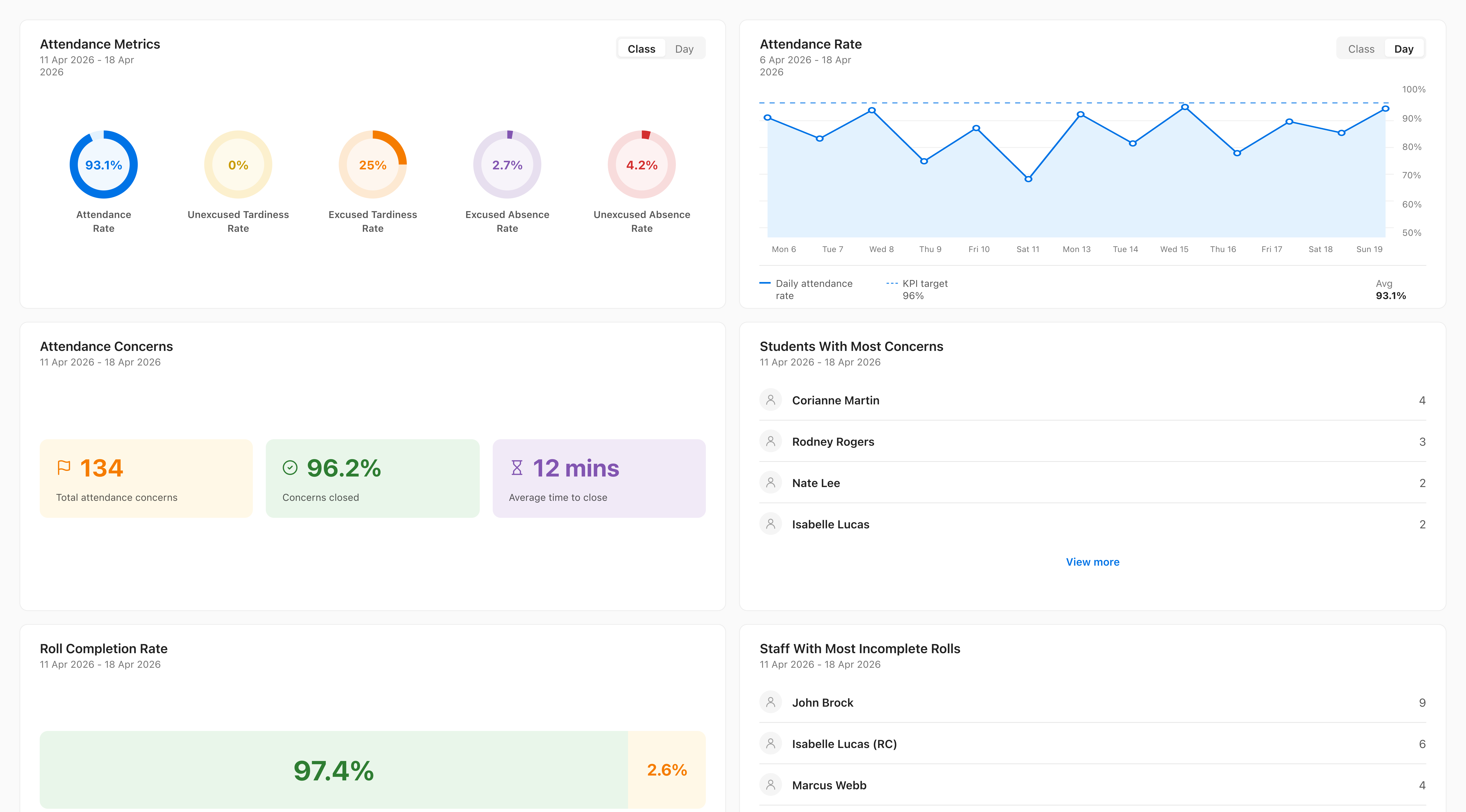
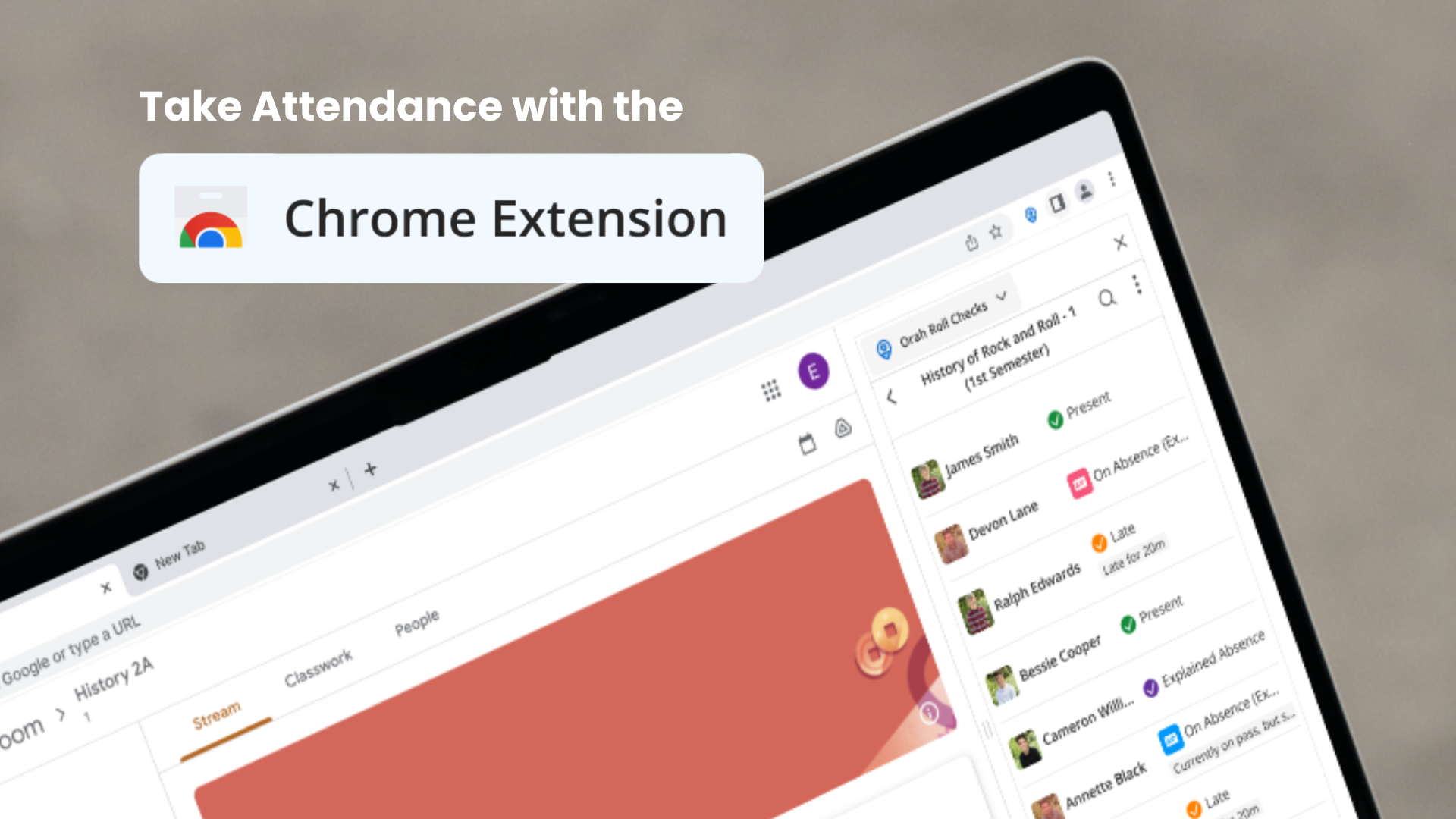
In Orah, teachers take the roll from a phone or laptop. It opens on their current class, and marking the exceptions takes seconds.
2. Let student movement update the roll on its own.
A late arrival, an early dismissal and a pass to the nurse are already recorded somewhere. The class roll should reflect them without the teacher typing them again.
In Orah, when a student checks in late at the front office kiosk, their class roll updates. Approved early dismissals and passes show on the roll too, so the teacher sees why a student is missing.
3. Catch a missed roll during the period, not at 3pm.
A roll that is a few minutes late is easy to fix. A roll that is discovered missing at the end of the day is not.
Orah shows the attendance team which rolls are overdue as the day goes. Substitutes can be given access to the classes they are covering, so those periods don't go unrecorded.
4. Show teachers what their roll does.
Teachers take attendance more consistently when they see it used. The roll is how the front office knows a student is on campus. It is how a parent gets a timely message instead of a confused one. It is how an advisor notices that a student keeps missing the same class.
In Orah, the attendance a teacher records writes back to your student information system, so nobody enters it twice. The same record shows the Dean of Students where each student is, period by period.
What it adds up to
When the roll is quick, movement updates it, and missed rolls are caught early, the attendance coordinator's job changes. They review a short list of real exceptions instead of rebuilding the day.
Teachers notice the difference too. Attendance takes less of their class time, and they hear about it less often after the fact.
There is one more benefit. A record that is accurate every ordinary day is the same record you rely on when you need to know where every student is. Staff can trust it because it is already right on a normal Tuesday.
See how Orah Attendance works
Download the 2026 State of Independent School Safety Report
In partnership with ATLIS and True North Research, we surveyed 85 independent schools across the US to create this 50-page report. Download your digital copy for free.